

Press
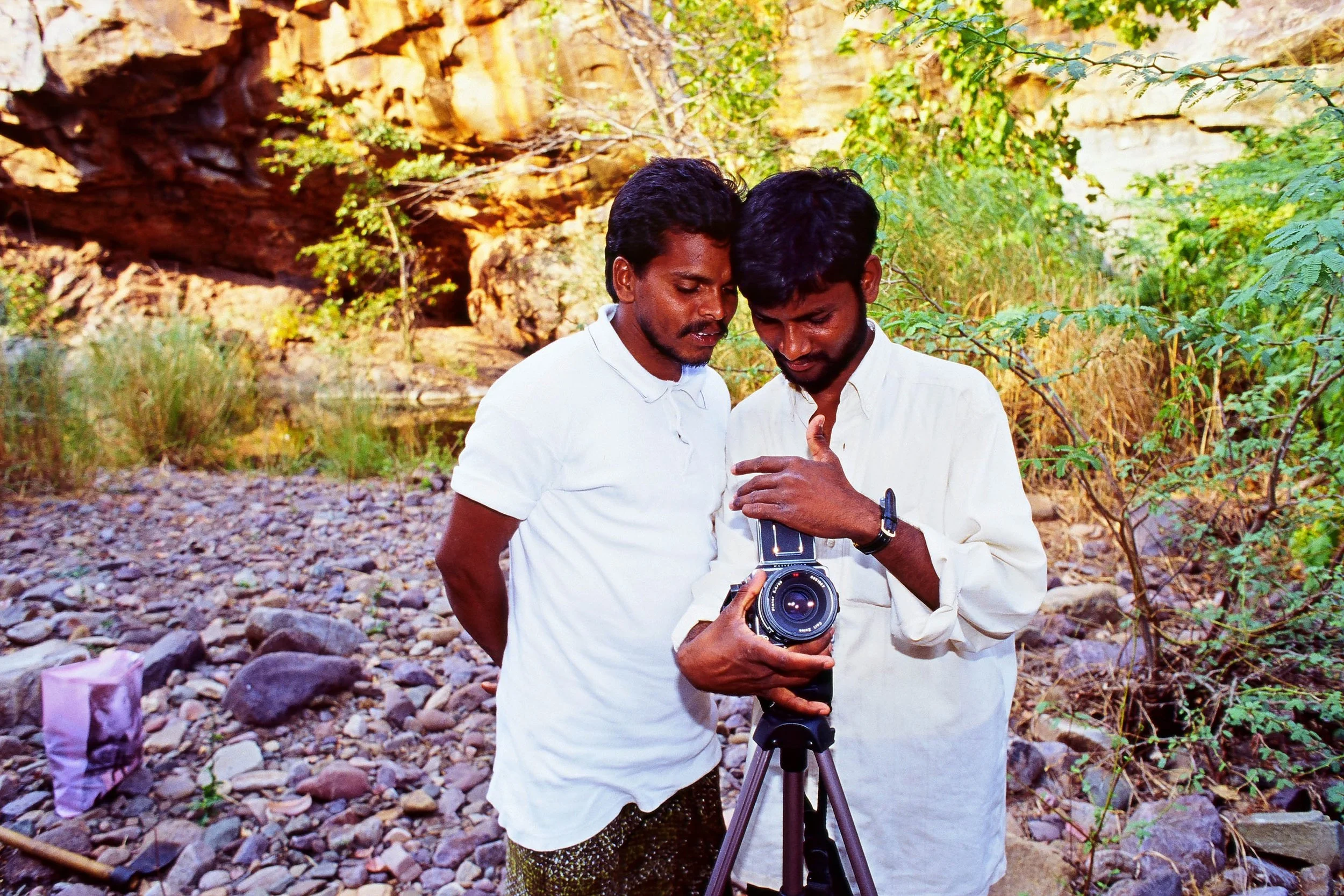
Presskit
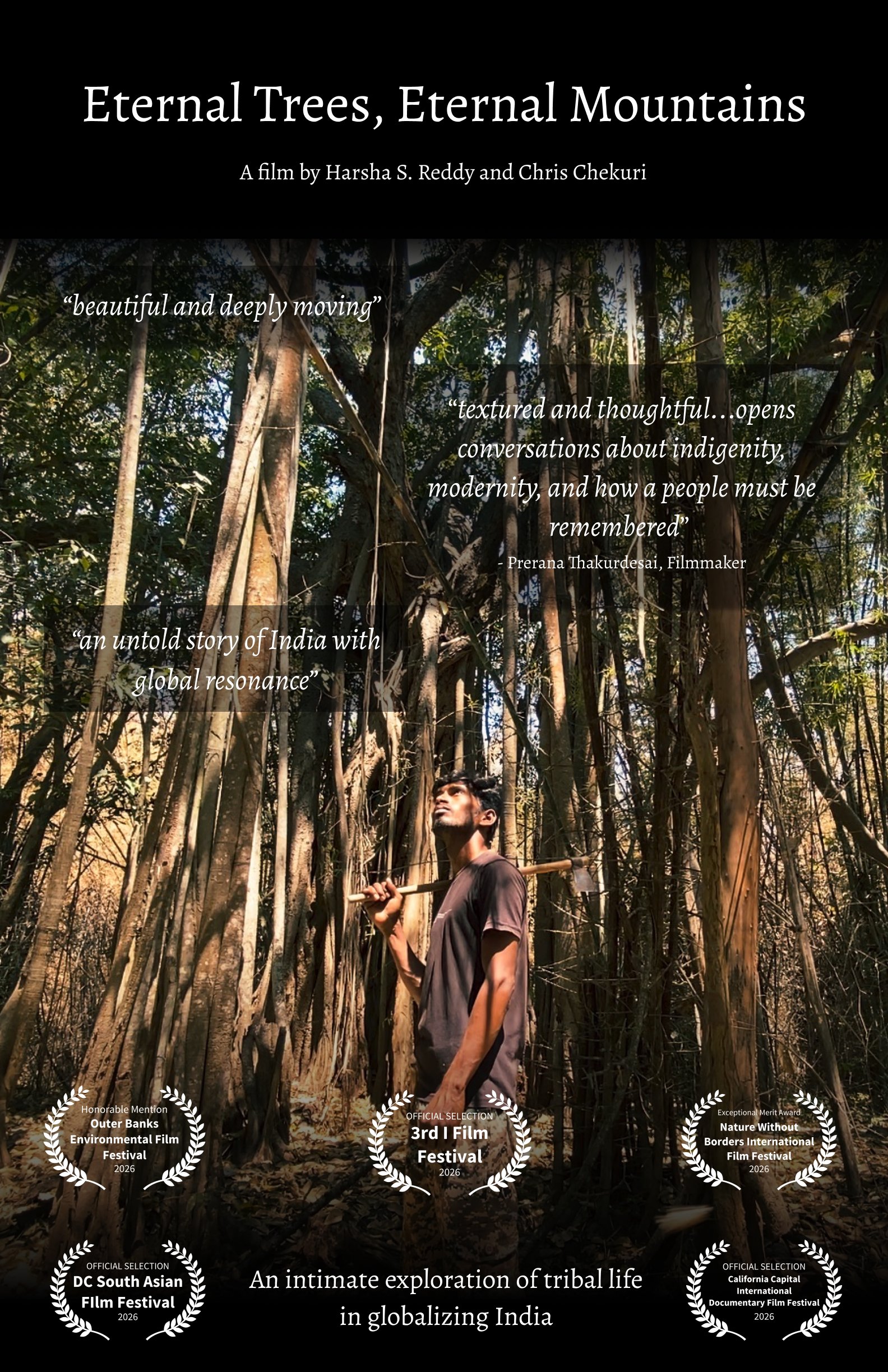
Poster
Logline
In the forests of south India, an extraordinary decades-long friendship between an Indian American doctor and the Chenchus opens a rare window into an indigenous community fighting to preserve its history, dignity, and home in a rapidly changing India.
Synopsis
In 1998, a young American student ventures into the forests of south India to study tigers. What he finds instead changes the course of his life.
Over the next two decades, he returns again and again to the villages of the Chenchu people, a tribal community whose roots run as deep as the ancient forests they call home. Friendships deepen. Children grow up. And the world around them begins to close in.
Joined by a historian friend, the two men embark on something more than a documentary. It is an act of witnessing. In kitchens and on porches, beside cooking fires and in the shadow of the sacred temple of Srisailam, they listen. They dig through folklore, historical records, and popular culture to unearth stories that have long been buried beneath a single, reductive label: primitive tribal group. What emerges is a portrait of a community that is complex, resilient, and alive.
Shot across breathtaking forest landscapes, with aerial imagery, original artwork, and rare archival material, Eternal Trees, Eternal Mountains is as visually arresting as it is emotionally urgent. It is a film about belonging and loss, about what is threatened by the relentless march of industrialization.
Directors’ Statement
I have spent half my life trying to understand what it means to belong somewhere.
When I first arrived in a Chenchu village as a twenty-year-old, I was welcomed with a generosity I hadn't earned and didn't fully understand. Malliah and his family gave me their home, their fire, their time. Something took root in me that I couldn't name then. The other week each month, I shared a room in Hyderabad with Chris, who was deep in his own research of the region. Over dosas at a hole-in-the-wall, we talked about belonging and about living between worlds: the city and the forest, India and the West. We didn't know then that we were already making something together.
When I returned a decade later, within minutes, Malliah's brother came running to meet me. Old warmth rushed back, but I was still a guest, an outsider with a camera. This tension never left me. It made our film more honest. We filmed with no script and no agenda — just trust, curiosity, and the warmth of people willing to share both their joy and their pain.
Post-production strengthened and tested our twenty-five year friendship. Chris wanted to excavate structural forces and history; I wanted to follow emotion and image. We fought for our visions. And ultimately, we needed both. This film is the honest record of that journey and of a love for a community that changed us.
— Harsha S. Reddy and Chris Chekuri
Testimonials
What stayed with me most about 'Eternal Tress Eternal Mountains' is the trust it carries. I could feel that it was not made from a distance, but through a relationship that was built over decades. I was struck by the film's honesty which is grounded in memory, mythology and research. It doesn't flatten the Chenchu community into symbols or stereotypes. It is presented in its complexity. As someone who grew up in India and travelled across the country, I was embarrassed but also delighted to learn about this community that never entered the "mainstream" imagination. Perhaps, purposefully. To me, the film offers something valuable - a textured and thoughtful process that can open up conversations about indigeneity, modernity and how a people must be remembered.
— Prerana Thakurdesai, FIlmmaker